

Arsal • Location • Starter
How it works
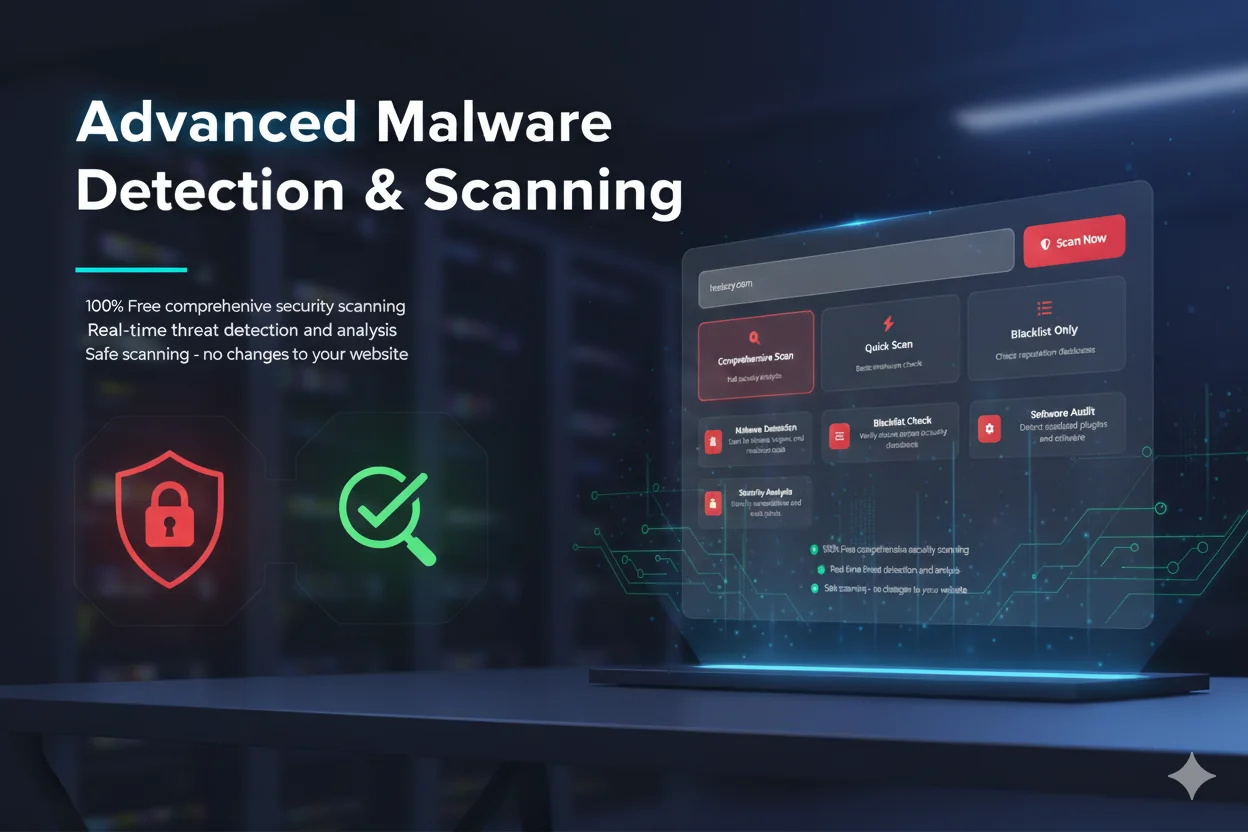
This is a free, read-only check of your website's public pages. We look for signs of compromise attackers often leave behind: PHP backdoors, web shells, exposed .env or database backups, and risky external scripts.
We also check blacklist reputation, detect WordPress and server software from the page, and review HTTPS and security headers.
Results are cached for 24 hours. Use Full scan for everything, or Quick scan for malware and reputation only.
Advanced Security Features
Advanced scanning algorithms detect viruses, trojans, backdoors, and malicious code injections that could compromise your website's security and reputation.
Check your website's reputation across major security databases including Google Safe Browsing, PhishTank, Norton Safe Web, and McAfee SiteAdvisor.
Identify outdated plugins, themes, and software components that may contain security vulnerabilities and need immediate updates.
Comprehensive security assessment including SSL configuration, security headers, and potential vulnerabilities that could be exploited by attackers.
Instant security analysis with real-time threat detection using the latest malware signatures and behavioral analysis techniques.
Comprehensive security reports with actionable recommendations to improve your website's security posture and protect against future threats.
What We Check For
Websites Scanned
Threats Detected
Accuracy Rate
Scan Time
Why Choose Our Security Scanner
Our optimized scanning engine delivers comprehensive security analysis in under 30 seconds, providing instant insights into your website's security status without any delays.
We check your website against 15+ major security databases including Google Safe Browsing, PhishTank, Norton, and McAfee to ensure comprehensive threat detection.
Pattern-based scanning of your public pages finds backdoors, shells, and exposed sensitive files—the same issues hosting support teams look for first.
Comprehensive analysis of your website's source code, JavaScript files, and server-side scripts to identify hidden malware and suspicious code injections.
Get comprehensive reports with actionable recommendations, threat severity levels, and step-by-step remediation guides to secure your website effectively.
Your website data is never stored or shared. Our scanning process is completely secure and respects your privacy while providing thorough security analysis.
We're committed to providing the most accurate and comprehensive website security scanning available.
Website Owners Worldwide
The best out there
See Why People love us!
The best out there
A website malware scanner is a security tool that analyzes your website for malicious code, viruses, and security vulnerabilities. It helps detect threats that could harm your visitors or damage your reputation.
We scan the public HTML of your site for known PHP backdoor patterns, web shells, obfuscated JavaScript, crypto-miner scripts, and common exposed files such as .env or database backups. It does not scan every file on your server.
We check your URL against Google Safe Browsing, PhishTank, and VirusTotal (70+ antivirus engines in one scan — not separate Norton/Sucuri calls). Unavailable means we could not reach that API right now. WordPress sites also get outdated-plugin checks and CVE data when WPScan is configured.
Outdated software and plugins often contain security vulnerabilities that hackers can exploit. Our scanner identifies outdated components and recommends updates to maintain security.
We recommend scanning your website at least weekly, or immediately after making changes, installing new plugins, or if you suspect any security issues. Regular scanning helps catch threats early.
If malware is detected, immediately isolate the infected files, remove the malicious code, update all software, change passwords, and consider professional malware removal services if needed.
Yes, our scanner is completely safe. It only reads and analyzes your website content without making any changes or modifications to your files or database.
We check whether your site uses HTTPS, whether security headers are present, and common cookie settings. This is a basic configuration review, not a full penetration test.
No. Only pages and files reachable without a login are tested. Use your hosting control panel or Imunify/Maldet for full-server scans.